



The potential for the Anaerobic Digestion Process (AD) and the benefits of Biogas are massively undervalued
Discover mankind’s sustainable renewable energy future here!
WHAT IS THIS PROCESS?
Anaerobic digestion is a biological process in which microorganisms break down organic materials such as food waste, manure, sewage sludge, and agricultural residues in the absence of oxygen. The process produces biogas, a renewable energy source containing methane, and digestate, a nutrient-rich fertiliser used in agriculture.
Read our practical guide to what anaerobic digestion is and how it works.
ANAEROBIC DIGESTION AND BIOGAS: A FACT!
“Anaerobic digestion turns waste into wealth, transforming what we discard into energy and resources, and in doing so, it strikes at the heart of the sustainability challenge: closing the loop in the consumption cycle.”
Who are we?
This website is an independent venture by guys who are simply fascinated by the subject (read our About Us).
We want to help more people see our vision for a vibrant, low-carbon future and become part of the AD technology movement.
You are very welcome to spend time on this website, and we hope that you will get involved by commenting and maybe even joining our campaign for better AD awareness, as well.
About the Author
This website is written and maintained by Steve Last, a Chartered Waste Manager and environmental engineering consultant with more than 30 years of experience in waste treatment, landfill engineering, and anaerobic digestion technologies. Learn more on the About Steve Last page.
How Anaerobic Digestion Works
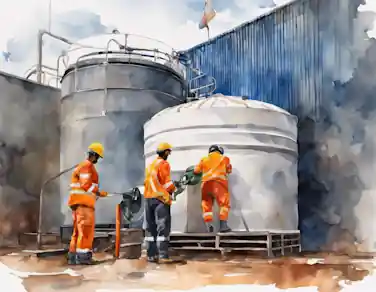
Anaerobic digestion is a multi-step biological process where microorganisms break down organic matter in the absence of oxygen. It follows these four distinct stages:
- Hydrolysis – Complex organic polymers (carbohydrates, proteins, and fats) are broken down into soluble monomers like sugars, amino acids, and fatty acids. This stage is essential because large molecules cannot pass through the cell membranes of the bacteria.
- Acidogenesis – The soluble molecules from hydrolysis are further broken down by acidogenic bacteria. This stage produces volatile fatty acids (VFAs), ammonia, carbon dioxide, and hydrogen sulfide.
- Acetogenesis – The products of acidogenesis are converted into acetic acid (CH3COOH), hydrogen (H2), and carbon dioxide (CO2). This stage serves as the final preparation for methane production.
- Methanogenesis – In the final stage, methanogenic archaea convert the acetate and hydrogen into methane (CH4) and carbon dioxide. This produces the “biogas” used for renewable energy.
Facts About the AD Process for Techies
1. Almost any organic matter can be digested anaerobically. Not all will produce enough biogas to be viable, though.
2. Anaerobic digestion occurs in nature at all temperatures, but below 10 degrees centigrade, the rate of biogas production is so slow that running a biogas process is usually considered not viable for any form of the biogas generation system.
3. There are two temperature ranges over which the many microorganisms that produce biogas work most efficiently. These are known as the:
Temperature ranges, with the optimum temperature usually considered to be at the top of the range.
Want All the Latest Biogas Info & Developments?
For regular updates, practical guides, and industry insights, visit our Anaerobic Digestion Blog.
Benefits of Anaerobic Digestion
a) Environmental Benefits
- Reduces carbon emissions and can contribute to national renewable energy targets. In some circumstances, it can be “carbon negative” removing more greenhouse gas than it creates
- Only biogas (with some carbon dioxide) is taken out, so valuable nutrients can be recycled back into the soil
- Digestate may also be used as natural fertiliser, as livestock bedding, as a feedstock for other biofuel production or for innovative fibre-based building-materials
- AD creates skilled ‘green’ jobs and contributes to growth in the local economy
- When used in conjunction with segregated municipal food waste collection, it reduces waste sent to landfill
- A digester sanitizes waste output providing a reduced public health hazard/ reduces pollution risk.
b) Benefits to Those That Own and Operate an Anaerobic Digestion Facility
- Landfill taxation costs are reduced, and transportation fuel costs can be less
- Owning an AD plant lends authority to the owner organisation’s green credentials
- Possible government incentive payments available
- Secures a reliable long-term waste disposal route for the plant owners’ own waste
- Potential for truly profitable sales of digester outputs
- Make and use your own power and heat your home with CHP!
- Energy Cost Security: No more business-destroying energy cost price increases.
- Fertiliser Cost Security: Agricultural operators are protected against wild fluctuations in mineral fertiliser costs.
Explore Anaerobic Digestion Topics
- Anaerobic Digestion Basics
- Anaerobic Digestion Blog Articles
- Anaerobic Digestion Plant Design
- Anaerobic Digestion Guides and Downloads
Is Anaerobic Digestion a Type of Composting?
Anaerobic digestion is a biological process similar to composting but without air. As in composting, micro-organisms break down organic matter into simpler smaller compounds and reduce its bulk or “mass”.
However, unlike composting, which overall always consumes energy, AD can be used to create energy. That is because it produces a gas known as biogas, just over half of which is methane. Everyone that lives in a developed nation and has cooked anything on a kitchen stove, using gas piped in from the street, has used methane and knows how cleanly it burns, and how wonderfully hot the flame is, because “natural gas” is pure methane.
In addition to biogas, the process also produces “digestate” a slurry or paste, which comprises a solid fibrous residue, and a liquid portion.
Mind-Blowing Ancient Origins!
The process that takes place in a biogas digester is truly ancient:
- Fermentation for the production of alcohol was known to the Ancient Egyptians and is recorded as far back as 2,000 BC.
- The methane-producing stage of anaerobic digestion is performed by a type of microorganism known as archaea. It’s not a bacterium. In fact, it comes from a distinctly different branch of the phylogenetic tree of life from bacteria.
- Archaea are so old that they are thought to predate bacteria, and bacteria evolved from them.
- As the oldest known life-form on the planet, none of us would be here without them.
- Given that they are so abundant in nature and so successful in what they do, why have they been ignored by modern technology until very recently?
Digestate: A Renewable Fertiliser
In addition to renewable energy, anaerobic digestion produces digestate, a nutrient-rich organic fertiliser containing nitrogen, phosphorus, and potassium. Digestate recycling plays an increasingly important role in sustainable agriculture by reducing dependence on synthetic fertilisers derived from fossil fuels.
UK AD Sector is Healthy and Growing in 2026!
Global Growth of Anaerobic Digestion
The number of anaerobic digestion plants worldwide has increased rapidly in recent years as governments and industries seek renewable energy solutions and sustainable waste management systems. Anaerobic digestion is now widely used to treat food waste, agricultural residues, sewage sludge, and industrial organic wastes while producing renewable biogas energy.
By the first quarter of 2025, the EU 27 states reached a milestone of 1,678 biomethane-producing facilities, while the number of plants in Europe as a whole is now 21,000.
In the EU biogas-derived biomethane contributed 6% of the total natural gas consumption in 2024.
The sector continues to show impressive resilience and growth, with the EBA reporting that 165 new plants began operations between the 2024 and 2025 data collections alone. This surge is part of a broader trend that has seen the total number of European plants rise from 1,023 in 2021 to nearly 1,700 today, as the continent moves aggressively toward the REPowerEU target of 35 bcm of biomethane by 2030.
According to the IEA Net Zero Emissions by 2050 Scenario, biogas output is expected to triple in their 25 year forecast period to 2030. Current projections suggest that annual global growth in biogas output remains robust, with the sector maintaining strong momentum as countries accelerate renewable energy deployment to meet climate targets.
According to estimates from the Anaerobic Digestion and Bioresources Association (ADBA), as of March 2026, the UK has over 750 operational facilities, continuing the upward trajectory from previous years. This growth included additional biomethane to grid (BtG) and combined heat and power (CHP) plants coming online. Furthermore, there were approximately 50+ BtG projects in various stages of planning or construction with significant cumulative biomethane capacity.
ADBA also states that approximately 36 million tonnes of organic material are digested annually by the entire UK industry. This organic material would otherwise release greenhouse gases, including extremely climate-changing methane, if it were left untreated in a landfill.
The AD sector produces an estimated 21 TWh of biogas annually, which is either upgraded to biomethane and put straight into the national gas grid or utilised to produce heat and electricity via a combined heat and power (CHP) unit.
Currently, the industry reduces greenhouse gas emissions in the UK by 1% annually.
In the UK, the AD and biogas industries currently employ an estimated 4,800 people.
The UK sector as a whole expanded by 5% last year (2025), which is close to the global expansion rate.
Farm waste feedstocks, including manure, slurry, crops, and crop waste, continue to power the majority of facilities, with increasing focus on optimising feedstock mix for maximum biogas yield.
Food waste remains the most common single feedstock, with processing volumes continuing to grow through 2026 as local authorities and businesses
- Implement the UK’s Simpler Recycling initiative
- collect household kitchen waste weekly, and
- are increasingly diverting organic waste from landfills.
While updating this section in March 2026, the Middle East war seems certain to raise energy prices and add further to the rate of growth of the AD and Biogas industry.
The Anaerobic Digestion Process Renaissance
Until the early 2000s, there had been a long period of cheap fossil-fuel-sourced power. While power was so cheap before the pandemic, the anaerobic digestion process was largely ignored in the west. China and India and some other nations realized its value, especially to subsistence farmers and developed early versions. Many were the still popular buried, fixed dome, household and small community biogas digester systems which they invented. Ever larger numbers of these renewable energy plants are now being built and operated, so that in 2024 literally millions of people are benefiting from the “biogas renaissance”.
In the western nations during the first half of the 20th century, AD had been popular among the water boards, and municipal corporations for the safe disposal of sewage sludge, but almost all of those digesters had, by then, been replaced by incinerators.
Energy was so cheap that even those running those incinerator plants failed to truly realize that they were using energy, to destroy energy!
That was an expensive waste, which is now being put right as globally large numbers of sewage sludge incinerators are being shut-down and replaced with biogas plants. The latest of these can be so efficient in making power that they can produce electricity to run the entire wastewater treatment works (sewage works) solely using the sludge from the works as their bio-fuel!
These are just two examples of many, of the way that the anaerobic digestion and biogas industry is now growing at the smallest community level and at huge wastewater treatment facilities.
The word is out now, and even if fluctuating natural gas and oil prices reduce in the coming year, expect to see more and more biogas plants wherever you go!
The new UK trend will be for new food waste AD facilities ahead of food waste curbside collection to all English districts by 2025.
Types of Anaerobic Digestion Plants – From the Smallest to the Largest
DIY and Micro-Anaerobic Digestion Systems
Users:
Individuals and educational establishments
Type: Desk-scale, laboratory and yard digesters
Equipment:
-bottle and flask reactors – balloons and car type inner tubes
More Info:
Watch YouTube videos for demos.
Household and Community Biogas Plants
Users: Households and community groups Type: Fixed dome and “Arti” Equipment: -stone built buried chambers -arched dome, floating drum More Info: YouTube videos, “Arti” website etc.
On-Farm and Central Biogas Plants
Users: Farm businesses, co-operatives etc. Type: Usually wet-process Equipment: -circular tank reactors – biogas holders – flexible dbl. membrane covers More Info: US Agstar, UK WRAP websites etc.
Large Waste & Commercial Anaerobic Digestion Facilities
Users:
Public bodies, large waste companies.
Type: WasteWater Sludge Treatment Facilities, Large Farms, MBT Plants, Food Waste
Equipment:
-Wet & Dry AD Processes – Various
More Info:
Here and on our blogsite.
Types of Anaerobic Digestion Process
Wet AD Process (Most Common)
>Users:
All.
Feed Type:
All organic wastes, and crop residues.
Features:
-Wet & Dry feeds are mixed with water and pumped. -Large tanks. look like typical AD Plants
– Opportunities for CHP
Dry AD Process (Popularity Rising)
Users:
Not for DIY’ers or most farmers.
Feed Type: Fibrous low water content Feed Materials.
Features:
-Material handled as a solid -Not pumped. -Inoculum spray introduces micro-organisms.
More Info:
Other Anaerobic Digestion Processes
- Low-Temperature AD
- High-Temperature Bio Thermic
- Two-Stage AD Digester
- UASB Digesters for Water Treatment
- Plug Flow Digestion Systems
- Semi Plug Flow Systems
- Facultative Bio-treatment
- Microbial Fuel Cell Systems
Reasons for Building an AD Facility – Other Than for Energy
For Water Treatment
- Although Wastewater Treatment Plants, which treat foul sewage, are routinely aerobic processes, some are anaerobic, especially in South America.
- Upflow Anaerobic Sludge Blanket (UASB) digester systems use the process and are primarily used for water treatment.
For Odour Abatement
- Large intensive livestock farms that are situated close to housing may be able to obtain permission to extend their operations only if they install an AD plant to reduce the odour of “muck spreading”.
- Digestion of manure substantially reduces muck-spreading odours, especially if ground injection of digestate, is used.
To Reduce Risk of Water Pollution (1)
- High-intensity livestock farms in high rainfall areas, and nitrate sensitive zones, may experience a particularly high risk of river pollution and prosecution from nitrate contaminated run-off when heavy rain occurs soon after spreading manure.
- Plant and soil uptake of the nutrients, from the digestate from a biogas plant, can be more rapid and reduce watercourse pollution risks.
To Reduce Risk of Water Pollution (2)
- The quality of the seawater at Blue Flag bathing beaches was shown to be impaired after heavy summer rainstorm events, in an estuarine environment.
- Installation of farm biogas plants to digest all livestock farm cattle slurry, reduced the faecal indicator organism counts on nearby beaches, avoiding damage to local tourism.
3 Top AD Plant Add-Ons and Upgrades
A Hydrolysis Stage
“Hard to digest” feed materials can benefit greatly by including a hydrolysis stage in which the substrate is subjected to high temperature and pressure, before digestion. Hydrolysis breaks up intact cells allowing the digestion micro-organisms to carry out a much more complete digestion/ higher gas yields/ reduced retention times and greater plant throughput.
Upgrade Biogas to Biomethane
- There is a lot of talk about creating added value for the raw biogas from anaerobic digesters, by “upgrading“.
- Upgrading is the process of removing carbon dioxide and other impurities from biogas and compressing it.
- It produces biomethane – a highly sought after product. It is sold as Renewable CNG (Compressed Natural Gas – a substitute for Liquefied Natural Gas) as a vehicle fuel, or injected into the regional natural gas grid distribution network.
Improved Biogas Reactor Mixing and Avoidance of “Hard Crust”
(Applies to Wet AD Processes Only)
- Many early digesters benefit from improved reactor mixing, which avoids “dead zones” within the digester tank.
- Some mixing systems can also break-up any tendency for a crust to form on the reactor surface.
- Higher biogas volumes may repay the cost of installation quite rapidly.